
Meet Panagiotis Zografos
Panagiotis Zografos
Panagiotis Zografos was a 19th-century Greek folk painter whose work became inseparable from the story of the Greek War of Independence (1821–1829). Born in the village of Vordonia near Sparta, he belonged to a generation of self-taught artists who transformed local craft traditions into powerful expressions of national memory.
Zografos gained prominence through his collaboration with General Ioannis Makrygiannis, a veteran of the Revolution and one of its most vivid chroniclers. Guided by Makrygiannis, Zografos and his sons created a cycle of twenty-four paintings that together form the first comprehensive visual chronicle of modern Greek history.
His art is defined by simplicity, clarity, and deep symbolism. Figures appear flat and timeless, yet the spirit of struggle and sacrifice radiates through every composition. Combining elements of Byzantine iconography with folk aesthetics, Zografos produced images that transcend decoration — an illustrated narrative that helped a new nation see itself for the first time.
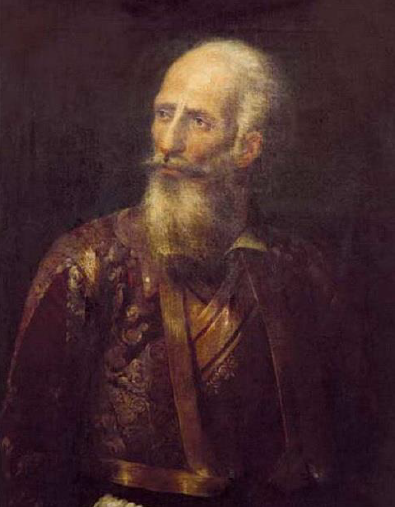
Panagiotis Zografos and General Makrygiannis
The collaboration between Zografos and General Ioannis Makrygiannis stands as one of the most remarkable encounters between art and history in modern Greece.
Makrygiannis (1797–1864) fought in the War of Independence and later became known for his Memoirs, a candid, personal account that shaped how Greeks remember the Revolution. Concerned that the struggle might be forgotten or misrepresented by foreign artists, he decided to commission a Greek painter — “a man of the people,” as he put it — to depict the battles and heroes of the uprising.
Between 1836 and 1839, Zografos and his sons worked under his close supervision to produce twenty-four tempera-on-wood panels. Each painting portrays key battles and sieges, accompanied by handwritten notes from Makrygiannis himself. These works combine documentary accuracy with moral purpose: they are not simply pictures, but a visual language of national identity.
For the largely illiterate population of the time, the paintings served as “visible history” — maps, lessons, and symbols of collective pride. In that sense, Makrygiannis and Zografos together created the first curated visual record of modern Greece.
Historical Context – The Greek Revolution of 1821
The Greek Revolution of 1821 was one of the defining events of modern European history. It marked both the rebirth of the Greek nation and a milestone in the wider movement for liberty across Europe. Against overwhelming odds, the revolutionaries united around a shared vision of freedom, courage, and sacrifice, ultimately founding the modern Greek state.
Beyond its political and military dimensions, the Revolution was also a cultural awakening — a moment when a new sense of national identity sought to connect the ancient, the Byzantine, and the popular. Its heroes and martyrs became symbols of moral virtue and collective perseverance.
Internationally, the struggle stirred deep sympathy and inspired the philhellenic movement, which linked the Greek cause to the Enlightenment ideals of freedom and human dignity. Within this historical framework, the collaboration between Zografos and Makrygiannis gave visual form to the birth of the modern nation. Several watercolor copies of the paintings were made and presented to King Otto and foreign philhellenes, ensuring that the visual record of the Revolution would circulate beyond Greece.
These paintings are not just depictions of battles but manifestations of a shared vision — art as memory, education, and national self-definition.
The Art of Panagiotis Zografos
Zografos’ work belongs to the tradition of Greek folk painting yet transcends it through its conceptual ambition. His compositions combine the directness of vernacular storytelling with the structure and symbolism of Byzantine art.
He made deliberate choices that break with academic realism: figures appear without perspective, space and time overlap, and each scene blends multiple events and locations into a single unified image. This flattening of space turns the viewer’s attention to meaning rather than technique — to courage, unity, and divine protection rather than individual likeness or anatomy.
The simplicity of this “people’s art” allowed Makrygiannis to teach history visually, in a form that everyone could understand. Today, the Zografos paintings are seen as a pioneering experiment in visual narration — anticipating the logic of the modern documentary and even the graphic novel. Through them, Zografos transformed history into image and image into a living act of remembrance.
The Story of the Paintings – From Zografos’ Workshop to the Gennadius Library
The paintings created by Panagiotis and Dimitrios Zografos under the guidance of General Makrygiannis between 1836 and 1839 have had a remarkable journey. Conceived as visual records of the War of Independence, they were intended not as decoration but as instruments of remembrance and education for the people.
During the 19th century, several watercolor copies were produced and offered to King Otto and to prominent philhellenes, allowing this unique visual narrative of the Revolution to travel beyond Greece. The original tempera-on-wood panels, however, eventually disappeared from public view.
In 1909, the Greek diplomat and scholar Ioannis Gennadios discovered them at a Rome auction (Libraria Antiquaria P. Luzzietti) and acquired them for his private collection. In 1922, he donated the paintings — together with his entire library and archives — to the Gennadius Library in Athens, where they remain preserved today.
Through this act of preservation, Zografos’ paintings moved from a modest folk workshop into the heart of national heritage — a testament to how art can safeguard memory, identity, and the spirit of freedom.
Panagiotis Zografos and Sparta
Born in Vordonia near Sparta, Panagiotis Zografos links the landscape of Laconia with one of the most important visual legacies of the Greek Revolution. His Spartan roots reflect a region long associated with courage, discipline, and moral clarity.
In 19th-century Sparta, folk creativity flourished as a form of cultural expression and remembrance. Through Zografos, this local tradition became part of the national story — transforming the memory of a place into the image of a people.
Today, the Zografos Museum in Sparta keeps this legacy alive, honoring the self-taught artist who gave form to freedom and turned history into image.
Meet Panagiotis Zografos
Panagiotis Zografos was a 19th-century Greek folk painter whose work became inseparable from the story of the Greek War of Independence (1821–1829). Born in the village of Vordonia near Sparta, he belonged to a generation of self-taught artists who transformed local craft traditions into powerful expressions of national memory.
Zografos gained prominence through his collaboration with General Ioannis Makrygiannis, a veteran of the Revolution and one of its most vivid chroniclers. Guided by Makrygiannis, Zografos and his sons created a cycle of twenty-four paintings that together form the first comprehensive visual chronicle of modern Greek history.
His art is defined by simplicity, clarity, and deep symbolism. Figures appear flat and timeless, yet the spirit of struggle and sacrifice radiates through every composition. Combining elements of Byzantine iconography with folk aesthetics, Zografos produced images that transcend decoration — an illustrated narrative that helped a new nation see itself for the first time.
The collaboration between Zografos and General Ioannis Makrygiannis stands as one of the most remarkable encounters between art and history in modern Greece.
Makrygiannis (1797–1864) fought in the War of Independence and later became known for his Memoirs, a candid, personal account that shaped how Greeks remember the Revolution. Concerned that the struggle might be forgotten or misrepresented by foreign artists, he decided to commission a Greek painter — “a man of the people,” as he put it — to depict the battles and heroes of the uprising.
Between 1836 and 1839, Zografos and his sons worked under his close supervision to produce twenty-four tempera-on-wood panels. Each painting portrays key battles and sieges, accompanied by handwritten notes from Makrygiannis himself. These works combine documentary accuracy with moral purpose: they are not simply pictures, but a visual language of national identity.
For the largely illiterate population of the time, the paintings served as “visible history” — maps, lessons, and symbols of collective pride. In that sense, Makrygiannis and Zografos together created the first curated visual record of modern Greece.
The Greek Revolution of 1821 was one of the defining events of modern European history. It marked both the rebirth of the Greek nation and a milestone in the wider movement for liberty across Europe. Against overwhelming odds, the revolutionaries united around a shared vision of freedom, courage, and sacrifice, ultimately founding the modern Greek state.
Beyond its political and military dimensions, the Revolution was also a cultural awakening — a moment when a new sense of national identity sought to connect the ancient, the Byzantine, and the popular. Its heroes and martyrs became symbols of moral virtue and collective perseverance.
Internationally, the struggle stirred deep sympathy and inspired the philhellenic movement, which linked the Greek cause to the Enlightenment ideals of freedom and human dignity. Within this historical framework, the collaboration between Zografos and Makrygiannis gave visual form to the birth of the modern nation. Several watercolor copies of the paintings were made and presented to King Otto and foreign philhellenes, ensuring that the visual record of the Revolution would circulate beyond Greece.
These paintings are not just depictions of battles but manifestations of a shared vision — art as memory, education, and national self-definition.
Zografos’ work belongs to the tradition of Greek folk painting yet transcends it through its conceptual ambition. His compositions combine the directness of vernacular storytelling with the structure and symbolism of Byzantine art.
He made deliberate choices that break with academic realism: figures appear without perspective, space and time overlap, and each scene blends multiple events and locations into a single unified image. This flattening of space turns the viewer’s attention to meaning rather than technique — to courage, unity, and divine protection rather than individual likeness or anatomy.
The simplicity of this “people’s art” allowed Makrygiannis to teach history visually, in a form that everyone could understand. Today, the Zografos paintings are seen as a pioneering experiment in visual narration — anticipating the logic of the modern documentary and even the graphic novel. Through them, Zografos transformed history into image and image into a living act of remembrance.
The paintings created by Panagiotis and Dimitrios Zografos under the guidance of General Makrygiannis between 1836 and 1839 have had a remarkable journey. Conceived as visual records of the War of Independence, they were intended not as decoration but as instruments of remembrance and education for the people.
During the 19th century, several watercolor copies were produced and offered to King Otto and to prominent philhellenes, allowing this unique visual narrative of the Revolution to travel beyond Greece. The original tempera-on-wood panels, however, eventually disappeared from public view.
In 1909, the Greek diplomat and scholar Ioannis Gennadios discovered them at a Rome auction (Libraria Antiquaria P. Luzzietti) and acquired them for his private collection. In 1922, he donated the paintings — together with his entire library and archives — to the Gennadius Library in Athens, where they remain preserved today.
Through this act of preservation, Zografos’ paintings moved from a modest folk workshop into the heart of national heritage — a testament to how art can safeguard memory, identity, and the spirit of freedom.
Born in Vordonia near Sparta, Panagiotis Zografos links the landscape of Laconia with one of the most important visual legacies of the Greek Revolution. His Spartan roots reflect a region long associated with courage, discipline, and moral clarity.
In 19th-century Sparta, folk creativity flourished as a form of cultural expression and remembrance. Through Zografos, this local tradition became part of the national story — transforming the memory of a place into the image of a people.
Today, the Zografos Museum in Sparta keeps this legacy alive, honoring the self-taught artist who gave form to freedom and turned history into image.
Meet Panagiotis Zografos
Panagiotis Zografos was a 19th-century Greek folk painter whose work became inseparable from the story of the Greek War of Independence (1821–1829). Born in the village of Vordonia near Sparta, he belonged to a generation of self-taught artists who transformed local craft traditions into powerful expressions of national memory.
Zografos gained prominence through his collaboration with General Ioannis Makrygiannis, a veteran of the Revolution and one of its most vivid chroniclers. Guided by Makrygiannis, Zografos and his sons created a cycle of twenty-four paintings that together form the first comprehensive visual chronicle of modern Greek history.
His art is defined by simplicity, clarity, and deep symbolism. Figures appear flat and timeless, yet the spirit of struggle and sacrifice radiates through every composition. Combining elements of Byzantine iconography with folk aesthetics, Zografos produced images that transcend decoration — an illustrated narrative that helped a new nation see itself for the first time.
The collaboration between Zografos and General Ioannis Makrygiannis stands as one of the most remarkable encounters between art and history in modern Greece.
Makrygiannis (1797–1864) fought in the War of Independence and later became known for his Memoirs, a candid, personal account that shaped how Greeks remember the Revolution. Concerned that the struggle might be forgotten or misrepresented by foreign artists, he decided to commission a Greek painter — “a man of the people,” as he put it — to depict the battles and heroes of the uprising.
Between 1836 and 1839, Zografos and his sons worked under his close supervision to produce twenty-four tempera-on-wood panels. Each painting portrays key battles and sieges, accompanied by handwritten notes from Makrygiannis himself. These works combine documentary accuracy with moral purpose: they are not simply pictures, but a visual language of national identity.
For the largely illiterate population of the time, the paintings served as “visible history” — maps, lessons, and symbols of collective pride. In that sense, Makrygiannis and Zografos together created the first curated visual record of modern Greece.
The Greek Revolution of 1821 was one of the defining events of modern European history. It marked both the rebirth of the Greek nation and a milestone in the wider movement for liberty across Europe. Against overwhelming odds, the revolutionaries united around a shared vision of freedom, courage, and sacrifice, ultimately founding the modern Greek state.
Beyond its political and military dimensions, the Revolution was also a cultural awakening — a moment when a new sense of national identity sought to connect the ancient, the Byzantine, and the popular. Its heroes and martyrs became symbols of moral virtue and collective perseverance.
Internationally, the struggle stirred deep sympathy and inspired the philhellenic movement, which linked the Greek cause to the Enlightenment ideals of freedom and human dignity. Within this historical framework, the collaboration between Zografos and Makrygiannis gave visual form to the birth of the modern nation. Several watercolor copies of the paintings were made and presented to King Otto and foreign philhellenes, ensuring that the visual record of the Revolution would circulate beyond Greece.
These paintings are not just depictions of battles but manifestations of a shared vision — art as memory, education, and national self-definition.
Zografos’ work belongs to the tradition of Greek folk painting yet transcends it through its conceptual ambition. His compositions combine the directness of vernacular storytelling with the structure and symbolism of Byzantine art.
He made deliberate choices that break with academic realism: figures appear without perspective, space and time overlap, and each scene blends multiple events and locations into a single unified image. This flattening of space turns the viewer’s attention to meaning rather than technique — to courage, unity, and divine protection rather than individual likeness or anatomy.
The simplicity of this “people’s art” allowed Makrygiannis to teach history visually, in a form that everyone could understand. Today, the Zografos paintings are seen as a pioneering experiment in visual narration — anticipating the logic of the modern documentary and even the graphic novel. Through them, Zografos transformed history into image and image into a living act of remembrance.
The paintings created by Panagiotis and Dimitrios Zografos under the guidance of General Makrygiannis between 1836 and 1839 have had a remarkable journey. Conceived as visual records of the War of Independence, they were intended not as decoration but as instruments of remembrance and education for the people.
During the 19th century, several watercolor copies were produced and offered to King Otto and to prominent philhellenes, allowing this unique visual narrative of the Revolution to travel beyond Greece. The original tempera-on-wood panels, however, eventually disappeared from public view.
In 1909, the Greek diplomat and scholar Ioannis Gennadios discovered them at a Rome auction (Libraria Antiquaria P. Luzzietti) and acquired them for his private collection. In 1922, he donated the paintings — together with his entire library and archives — to the Gennadius Library in Athens, where they remain preserved today.
Through this act of preservation, Zografos’ paintings moved from a modest folk workshop into the heart of national heritage — a testament to how art can safeguard memory, identity, and the spirit of freedom.
Born in Vordonia near Sparta, Panagiotis Zografos links the landscape of Laconia with one of the most important visual legacies of the Greek Revolution. His Spartan roots reflect a region long associated with courage, discipline, and moral clarity.
In 19th-century Sparta, folk creativity flourished as a form of cultural expression and remembrance. Through Zografos, this local tradition became part of the national story — transforming the memory of a place into the image of a people.
Today, the Zografos Museum in Sparta keeps this legacy alive, honoring the self-taught artist who gave form to freedom and turned history into image.